Water Tank Repair

Water Tank Repair


Water Tank Repair in Dubai: Don’t Let a Cracked Tank Ruin Your Ceiling

Your water tank sits on the roof, out of sight, out of mind. Until it isn’t. You notice a damp patch on the ceiling. Or your water starts tasting metallic. Or the tank overflow pipe runs constantly, and your DEWA bill jumps by AED 500. In Dubai’s heat, roof tanks take a beating — and when they fail, the damage spreads fast.

I’ve repaired water tanks across Dubai — from 500-liter residential tanks in Jumeirah villas to 10,000-liter commercial reservoirs in Al Quoz. The problems are usually the same: cracks from thermal expansion, corrosion at fittings, failed float valves, or internal coating breakdown that contaminates the water. The good news? Most tank issues are repairable without full replacement. The bad news? If you ignore them, you’re looking at ceiling damage, water contamination, or a tank that splits open and floods your roof.

This guide covers what goes wrong with Dubai water tanks, what you can check yourself, when repair makes sense versus replacement, and what the process actually involves.


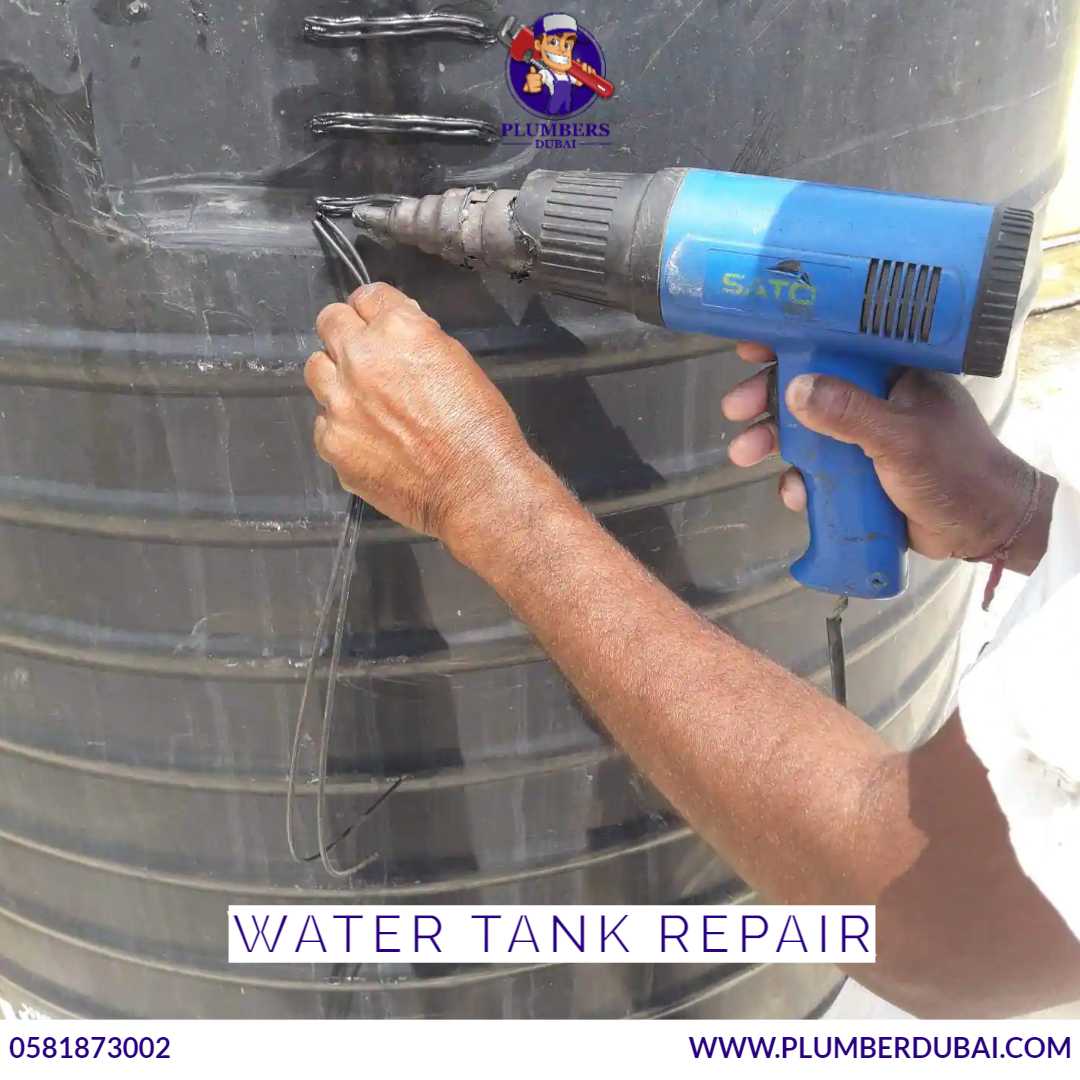
Technician inspecting cracked water tank on Dubai villa roof
Inspecting a cracked GRP water tank on a Dubai villa roof — thermal expansion stress caused the split along the seam

How Dubai’s Climate Destroys Water Tanks

Water tanks in Dubai face conditions that would destroy them in half the time elsewhere. Understanding why they fail helps you catch problems early.

Thermal Expansion Stress

In summer, your roof tank water sits at 35-40°C during the day, then cools to 25°C overnight. That 15-degree temperature swing causes the tank material to expand and contract daily. Over years, this cyclic stress creates microcracks that grow into splits. GRP (fiberglass) tanks are especially vulnerable — the resin becomes brittle with UV exposure, and the expansion-contraction cycle eventually cracks the shell.

I’ve seen 8-year-old GRP tanks with cracks running the full length of the seam. The owner thought it would last 20 years. In Dubai’s sun? Not a chance.

Hard Water Scale and Corrosion

Dubai’s municipal water runs 200-400 ppm hardness. Scale builds up on tank walls, fittings, and heating elements. In metal tanks — stainless steel or galvanized — scale traps moisture against the metal, accelerating corrosion. In concrete tanks, scale combined with slight acidity in the water erodes the interior surface, exposing aggregate and creating rough patches where bacteria colonize.

The scale itself isn’t the immediate problem. It’s what the scale hides: pitting corrosion in metal tanks, or the breakdown of internal waterproofing coatings.

UV Degradation

Plastic and GRP tanks on Dubai roofs get hammered by UV radiation year-round. The resin breaks down, the color fades, and the material becomes chalky and brittle. A tank that flexed slightly under water pressure becomes rigid and prone to cracking. Black or dark-colored tanks last longer than light ones — the pigment provides some UV protection — but even they degrade eventually.

Structural Load Issues

Water weighs 1 kilogram per liter. A 1,000-liter tank weighs a ton when full. Many Dubai villas have tanks sitting on improvised platforms — wooden frames, concrete blocks, or rusting steel stands that weren’t designed for the load. Platform settlement or corrosion causes the tank to sit unevenly, stressing the base and walls. Eventually, the tank cracks at the stress points or the platform collapses entirely.

Common Water Tank Problems and What They Mean

Visible Cracks or Leaks

The most obvious sign. Water dripping from the tank, puddles on the roof, or damp stains on the ceiling below. Cracks can be external (visible on the tank surface) or internal (only visible when the tank is empty and inspected). External cracks usually mean the tank shell has failed. Internal cracks might be repairable with epoxy or internal lining, depending on the material and location.

Where the crack is matters. A crack near the top of the tank, above the water line, is less urgent — it won’t leak until the tank overfills. A crack at the base or along a seam is critical — it’s under constant pressure and will spread.

Constant Overflow

Your overflow pipe runs continuously, even when no water is being used. This means the float valve or ballcock isn’t sealing properly. Either the float is waterlogged and sitting too low, the valve seat is worn or scaled, or the arm is bent. It’s a cheap fix — AED 80-150 for a new float valve assembly — but if ignored, the constant water loss adds up. I’ve seen DEWA bills spike by AED 800-1,200 per month from a stuck float valve.

Discolored or Bad-Tasting Water

Water that runs brown, smells musty, or tastes metallic indicates internal tank contamination. Causes include:

  • Rust from corroded metal fittings or a deteriorating tank interior
  • Algae growth in tanks with light penetration (clear or translucent tanks)
  • Bacterial biofilm on rough or deteriorated internal surfaces
  • Sediment buildup at the tank bottom that’s being stirred into the supply

This isn’t just unpleasant — it’s a health issue. If your water tastes or smells wrong, stop using it for drinking and cooking until the tank is inspected.

Reduced Water Pressure

If your tank supplies water by gravity (no booster pump), low pressure at the taps can mean the tank isn’t filling to the correct level. The float valve might be set too low, or the inlet pressure might be insufficient. In pump-fed systems, reduced pressure can mean the tank outlet is partially blocked by sediment or scale.

Hot Water Running Out Faster Than Usual

If you have a solar or electric water heater fed from the roof tank, and hot water runs out faster than before, check the tank level. A cracked tank that leaks slowly might not show obvious puddles but loses volume continuously. The water heater draws from a partially empty tank, and you run out faster. The leak might be evaporating on the hot roof before it becomes visible.


Internal coating repair being applied to water tank in Dubai
Applying internal epoxy coating to a concrete water tank — this extends tank life by 5-10 years and prevents contamination

What You Can Check Before Calling

Some tank issues have simple causes. Check these before calling a technician:

Inspect the Tank Exterior

Climb up (safely) and look at the tank. Visible cracks? Chalky, faded surface? Corroded fittings? Water stains on the roof around the tank? Take photos — they help us assess the problem before we arrive.

Check the Float Valve

Lift the float arm manually. Does the water stop? If not, the valve seat is worn. Does the float feel heavy or waterlogged? If yes, it’s absorbing water and sitting too low, causing constant filling. A new float valve is a 10-minute DIY job if you’re comfortable turning off the water supply.

Look at the Overflow

Is water flowing from the overflow pipe right now, with no taps running in the house? That’s a stuck float valve. Note how much is flowing — a trickle versus a steady stream helps us diagnose the severity.

Check the Tank Platform

Is the tank sitting level? Is the platform rusting, cracking, or sagging? A tilted tank stresses the walls and base unevenly. Platform problems need fixing before or along with tank repair — a new tank on a bad platform will fail the same way.

Repair or Replace? The Decision

Not every damaged tank needs replacing. Here’s how we decide:

Repair When:

  • The tank is under 10 years old and structurally sound overall
  • Damage is limited to specific cracks or fitting failures
  • The interior coating is deteriorating but the substrate (concrete, steel, GRP) is intact
  • Cost of repair is under 40% of replacement cost
  • The tank is a custom size or shape that would be expensive or difficult to replace

Replace When:

  • The tank is over 12-15 years old (GRP) or 20+ years (concrete with good maintenance)
  • Cracks are extensive, structural, or along load-bearing seams
  • Multiple repairs have been done in the past 2-3 years
  • The interior is severely corroded or the concrete aggregate is exposed
  • Repair cost approaches 60% or more of replacement cost
  • The tank is undersized for current demand (you’ve added bathrooms, tenants, or extensions)

What Repair Actually Involves

For tanks that are repairable, here’s what we do:

External crack repair (GRP/plastic tanks): We drain the tank, clean and dry the cracked area, then apply fiberglass patches with epoxy resin. For smaller cracks, high-strength epoxy filler alone works. The repair area gets sanded smooth and sealed. Properly done, this lasts 3-5 years. It’s not a permanent fix for aging tanks, but it buys time.

Internal coating (concrete and metal tanks): We drain and clean the tank interior, removing scale, rust, and biofilm. Then we apply a food-grade epoxy or polyurethane coating that seals the surface, prevents corrosion, and creates a smooth finish that resists bacterial growth. This extends tank life by 5-10 years and immediately improves water quality.

Fitting replacement: Inlet valves, outlet fittings, overflow pipes, and drain valves all wear out. We replace with brass or stainless steel fittings that resist corrosion better than the original galvanized or plastic ones. We also upgrade float valves to modern, adjustable models with better sealing.

Platform repair or replacement: Rusting steel stands get sandblasted and repainted, or replaced with galvanized or stainless steel. Cracked concrete platforms get repaired or rebuilt. Wooden platforms get replaced entirely — wood doesn’t belong under a water tank in Dubai’s climate.

What Replacement Involves

When replacement is the right call, here’s the process:

Tank Selection

We calculate your actual water demand — number of residents, bathrooms, appliances, and peak usage patterns. Most Dubai villas need 500-1,000 liters per day of storage. We specify tanks with 1.5-2x daily demand capacity to handle supply interruptions and peak loads.

Material choice depends on budget and application:

  • GRP (fiberglass): Mid-range cost, 10-15 year lifespan in Dubai, lightweight, easy to install. Best for residential roof tanks.
  • Stainless steel: Higher cost, 20+ year lifespan, hygienic, easy to clean. Best for drinking water applications and commercial use.
  • Polyethylene (plastic): Lower cost, 8-12 year lifespan, UV resistant grades available. Good for budget-conscious residential.
  • Concrete: Highest cost, 30+ year lifespan if maintained, custom shapes possible. Best for large commercial or underground installations.

Installation

We remove the old tank, inspect and repair or replace the platform, and install the new unit with proper fittings, overflow protection, and access for cleaning. We also install isolation valves on inlet and outlet — something many original installations skip, making future maintenance a nightmare.

For gravity-fed systems, we ensure the tank height provides adequate pressure (minimum 3-4 meters head for reasonable flow). If the existing platform is too low, we raise it or recommend adding a booster pump.

Costs in Dubai (2026)

ServiceCost Range (AED)Notes
Float valve replacement150 – 300Parts + labor, standard valve
External crack repair (GRP)400 – 800Epoxy/fiberglass patch
Internal coating (concrete/metal)1,500 – 3,500Depends on tank size and condition
Fitting replacement (multiple)500 – 1,200Brass/stainless upgrades
Platform repair/replacement800 – 2,500Steel or concrete platform
Residential tank replacement (500-1000L)2,500 – 5,000GRP or polyethylene, including installation
Residential tank replacement (1000-2000L)4,000 – 8,000GRP or stainless steel
Commercial tank replacement (5000L+)8,000 – 20,000Concrete or large GRP, custom installation
Tank cleaning and disinfection400 – 1,000Recommended annually

Preventive Maintenance That Extends Tank Life

The tanks that last 20 years in Dubai aren’t lucky — they’re maintained. Here’s what we recommend:

  • Annual inspection: Check exterior for cracks, fading, or chalking. Inspect fittings for corrosion. Verify float valve operation. Look for roof stains indicating leaks.
  • Annual cleaning: Drain, scrub interior, remove sediment, disinfect with food-safe chlorine solution, rinse thoroughly. This prevents biofilm buildup and extends coating life.
  • Platform check: Every 2 years, inspect steel stands for rust, concrete platforms for cracks, and wooden platforms for rot (replace wood immediately if found).
  • Coating refresh: For concrete and metal tanks, re-coat interior every 5-7 years before the existing coating fails.
  • UV protection: For GRP and plastic tanks, apply UV protective coating every 3-4 years, or install a shade structure if possible.

We offer annual maintenance contracts for villa and commercial tank systems in Dubai. For AED 800-1,500 per year, you get scheduled inspections, cleaning, and priority repair response. Compared to emergency replacement costs, it’s a bargain.

When You Need Emergency Help

Some tank problems can’t wait. Call for emergency service when:

  • The tank is leaking heavily and water is entering the building
  • The tank has cracked structurally and could collapse
  • Water contamination is suspected (discoloration, odor, illness)
  • The overflow is flooding the roof or neighboring properties
  • You have no water storage and the tank is unusable

We provide 24/7 emergency water tank repair across Dubai. For critical leaks, we can install temporary patch repairs same-day to stop damage, then schedule permanent fixes.

Why Dubai Homeowners Call Us

We’ve repaired and replaced water tanks in every area of Dubai — from rooftop tanks in Deira apartments to underground reservoirs in Palm Jumeirah villas. We know the local water conditions, the common failure modes, and what materials actually last here.

When you call us, you get:

  • Honest assessment — repair when it makes sense, replace when it doesn’t
  • Same-day response for urgent leaks
  • Proper materials — brass fittings, stainless hardware, food-grade coatings
  • Clean work — we protect your roof, clean up debris, and leave no mess
  • Documentation — photos of damage, repair details, maintenance recommendations
  • Warranty — 1 year on repairs, 5-10 years on new tank installations depending on material

Completed water tank repair with new fittings and sealed cracks on Dubai villa roof
Completed tank repair with new brass fittings, sealed cracks, and reinforced platform — ready for years of reliable service

Call Before the Ceiling Caves In

A small tank crack today is a flooded ceiling tomorrow. In Dubai’s heat, damage accelerates. That slow drip becomes a split seam. That slight overflow becomes a structural platform failure. Early repair is always cheaper than emergency replacement plus ceiling restoration.

Call Plumber Dubai at 058 187 3002 for water tank inspection, repair, or replacement. We’ll assess your tank’s condition, explain your options, and give you a fixed quote — no surprises, no upselling.

Follow us on Facebook: Plumber Dubai

Related Services

Tank Cleaning |
Water Tank Replacement |
Tank Refurbishment |
Water Pump Repair |
Leak Detection |
Plumbing Maintenance