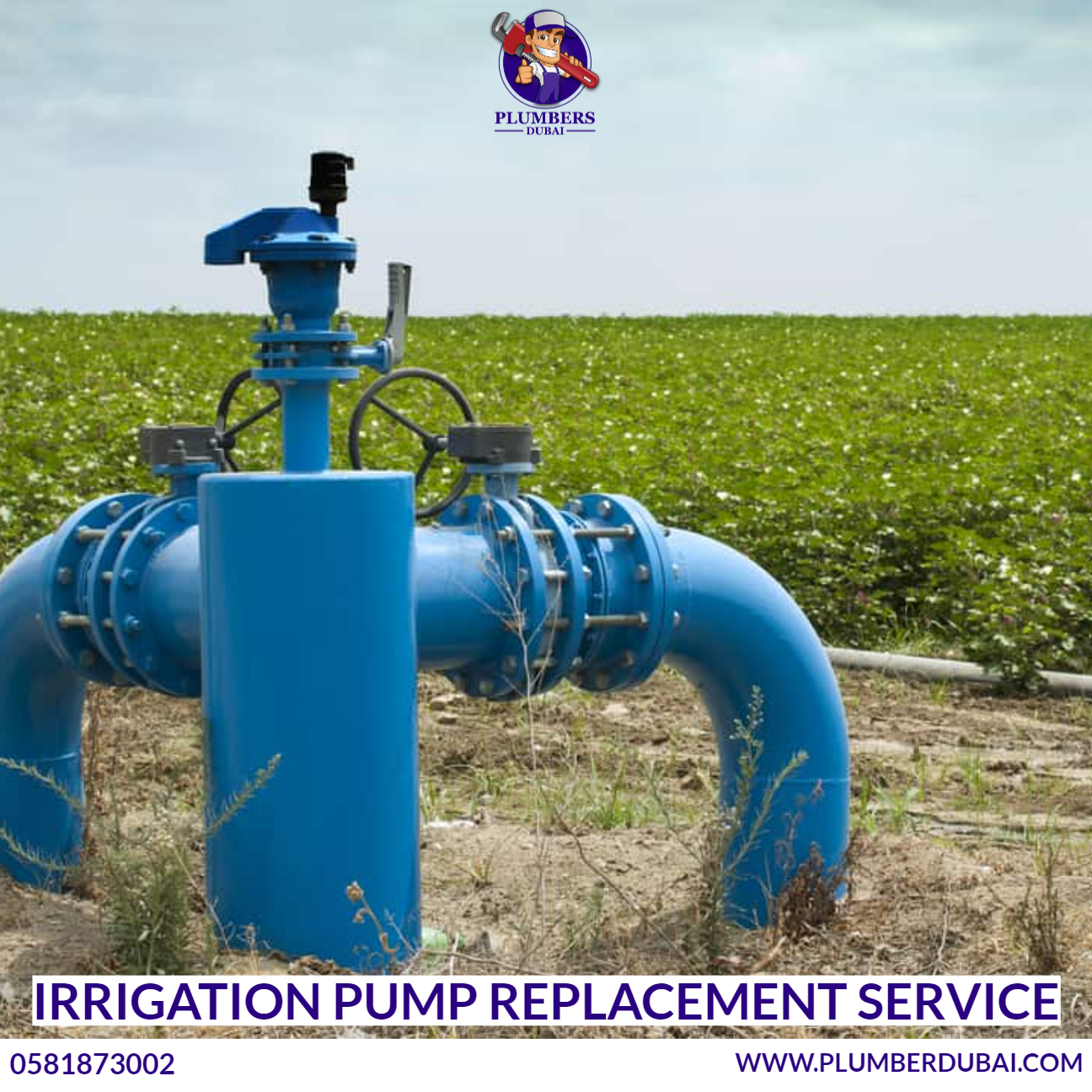
Irrigation Pump Replacement Service
Table of Contents
ToggleIrrigation Pump Replacement in Dubai: Don’t Let Your Garden Die While You Figure It Out
Your irrigation pump dies on a Tuesday afternoon. By Thursday, your lawn looks like toast. By Saturday, your landscaping investment is circling the drain — literally. In Dubai’s heat, you don’t have the luxury of waiting a week to sort this out.
I’ve replaced irrigation pumps across this city — from villa gardens in Arabian Ranches to commercial landscapes on Sheikh Zayed Road. The mistakes people make aren’t complicated. They buy the wrong pump size. They try to band-aid a dead unit instead of replacing it. They hire someone who installs a pool pump in an irrigation line and wonders why it fails in three months.
This guide covers when to repair versus replace, how to pick the right pump for your setup, what the replacement process actually involves, and what it’ll cost you in Dubai. No generic pump theory. Just what you need to get water flowing again before your garden turns to dust.

How to Know Your Pump Is Actually Dead
Before you spend money on a replacement, make sure the pump is the problem. I’ve had customers ready to buy new units when the issue was a tripped breaker or a clogged intake screen. Here’s the checklist I run through on every call:
Check the Power First
Pumps draw serious current. In Dubai villas, where electrical loads spike during summer, breakers trip more often than you’d think. Check your distribution panel. If the pump breaker is tripped, reset it. If it trips again immediately, you’ve got an electrical fault — possibly a short in the motor winding. That’s a replacement, not a repair.
Also check the capacitor. Irrigation pump motors need a start capacitor to get going. If the capacitor is blown — common in Dubai’s heat — the motor hums but never spins. A new capacitor costs AED 80-150. A new pump costs AED 1,500-4,000. Check this first.
Listen to What the Pump Is Telling You
Sound diagnostics are surprisingly reliable:
- Clicking or grinding: Mechanical failure — bearings, impeller, or shaft. Usually means replacement.
- Humming but not spinning: Capacitor issue or seized motor. Capacitor is cheap; seized motor means replacement.
- Running but no water flow: Impeller damage, air lock, or clogged intake. Might be repairable.
- Running hot and cutting out: Thermal overload. Could be low voltage, blocked cooling vents, or motor wear. Sometimes repairable, often replacement territory.
- Silent — nothing at all: Electrical fault, control panel issue, or complete motor burnout.
Check the Intake and Discharge
Dubai’s irrigation water — whether from municipal supply, well water, or treated greywater — carries debris. Sand, leaves, scale flakes, and even small stones clog intake screens and damage impellers. Pull the intake screen and clean it. Check the discharge line for kinks or blockages. If the pump runs fine after cleaning, you just saved yourself a replacement.
Repair or Replace? The Decision Framework
Not every dead pump needs replacing. But some repairs are throwing good money after bad. Here’s how I decide:
Replace When:
- The pump is over 7 years old and the motor has failed
- Multiple components have failed sequentially (capacitor, then bearings, then seal)
- The pump is undersized for your current irrigation needs (you expanded the garden but kept the old pump)
- Repair costs exceed 60% of replacement cost
- The pump model is discontinued and parts are unavailable
- Energy efficiency matters — old pumps draw 30-50% more power than modern equivalents
Repair When:
- Single component failure (capacitor, pressure switch, mechanical seal)
- Pump is under 5 years old and otherwise in good condition
- The unit is a high-quality brand (Grundfos, KSB, Pedrollo) where parts are readily available
- The failure is external — electrical supply issue, control panel fault, or piping blockage
Here’s a real example: A customer in Jumeirah had a 5-year-old Grundfos irrigation pump that stopped working. Diagnosis: failed capacitor and slightly worn mechanical seal. Repair cost: AED 650. Replacement cost: AED 2,800. We repaired it. Two years later, it’s still running. That’s a repair win.
Another customer in Mirdif had a 9-year-old generic brand pump with seized bearings and a cracked impeller. Replacement parts weren’t available. Even if they were, the motor was drawing excessive current. Replacement was the only sensible option.
Picking the Right Replacement Pump
This is where most people go wrong. They walk into a hardware store, pick a pump that “looks about right,” and hope for the best. Or they call a handyman who installs whatever he has in his van. Here’s what actually matters:
Flow Rate: Liters Per Minute (LPM)
Your irrigation system needs a specific flow rate to operate all zones effectively. Too little flow, and your sprinklers at the end of the line barely mist. Too much flow, and you waste water, energy, and put unnecessary stress on pipes and fittings.
Quick calculation: count your sprinkler heads. Standard pop-up sprinklers need 8-12 LPM each. Drip emitters need 2-4 LPM per zone. Add up the largest zone’s total requirement. Your pump needs to deliver at least that flow at the required pressure.
Example: A villa garden with 10 pop-up sprinklers in the largest zone needs roughly 100 LPM at 2.5 bar pressure. A pump rated for 80 LPM won’t cut it — you’ll have weak coverage at the far end.
Pressure: Meters of Head or Bar
Pumps are rated by the height they can lift water — called “head” in meters. For irrigation, you need enough pressure to overcome:
- Elevation difference (if your pump is below garden level)
- Pipe friction losses (long runs, small diameter pipes, lots of fittings)
- Sprinkler operating pressure (usually 1.5-3 bar)
In Dubai’s flat terrain, elevation isn’t usually the issue. But friction losses are. I’ve seen gardens with 50-meter pipe runs using 1-inch pipe where 1.5-inch was needed. The pump works hard, runs hot, and dies young. Right-sizing the pipe is as important as right-sizing the pump.
Pump Type: Centrifugal vs. Submersible vs. Jet
For most Dubai irrigation applications, you need one of three types:
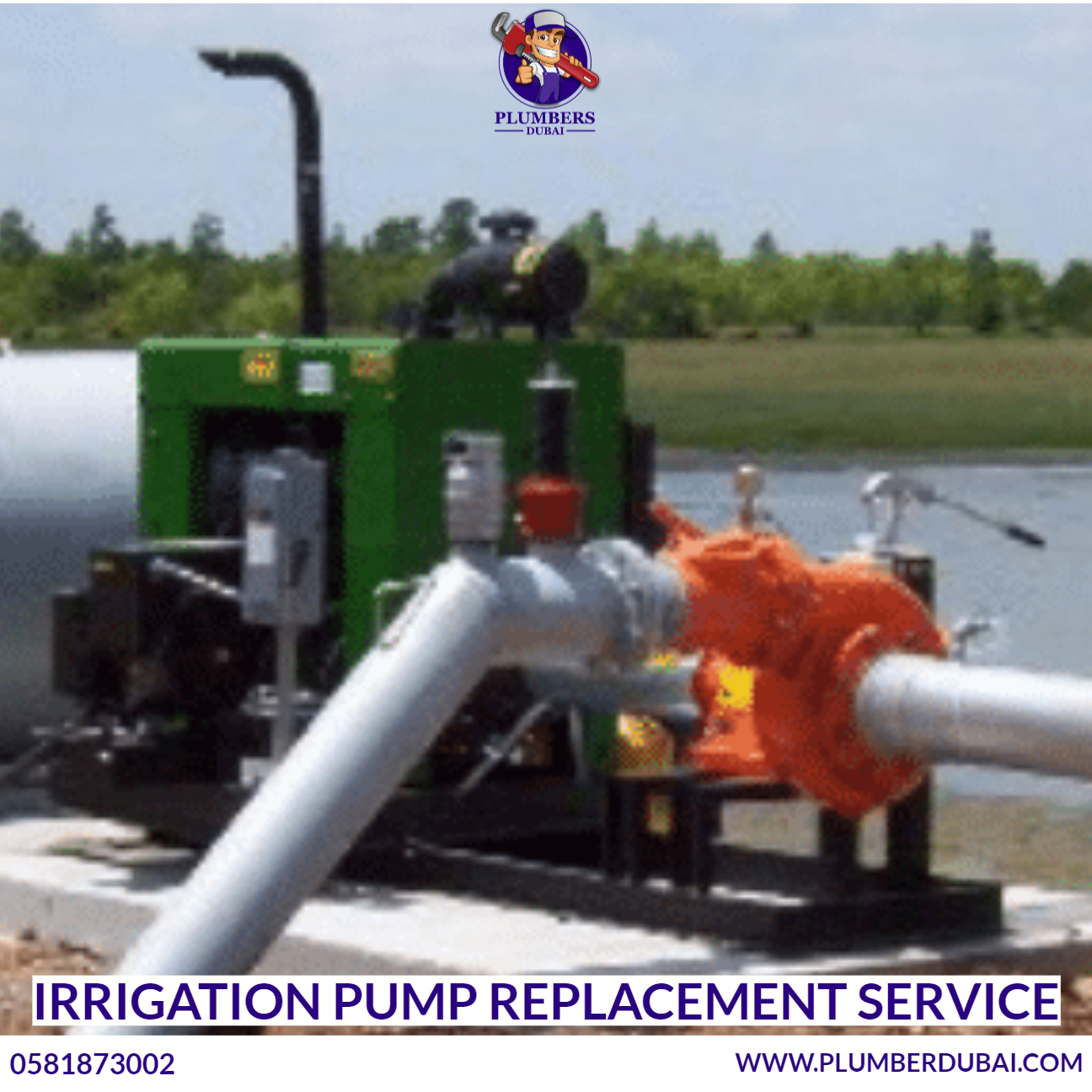
- Centrifugal surface pump: Sits above ground, pulls water from a tank or well. Most common for villa gardens with municipal or tank-supplied water. Easy to access for maintenance. Needs priming before first use.
- Submersible pump: Sits inside the water source — typically a well or underground tank. More efficient for deep water sources. Harder to service but lasts longer in clean water conditions.
- Jet pump: A surface pump with a specialized mechanism for pulling water from deeper sources. Useful for shallow wells where a full submersible isn’t needed. More complex, more maintenance.
For 90% of Dubai villa irrigation systems fed by rooftop tanks or municipal supply, a centrifugal surface pump is the right choice. Simple, reliable, easy to service. Don’t let someone sell you a submersible for a surface application — it’s overkill and harder to maintain.

What the Replacement Process Actually Looks Like
A proper pump replacement isn’t just swapping old for new. Here’s what we do on every job:
Step 1: Assess the Full System
Before touching the pump, we check the entire irrigation setup. Pipe condition, valve operation, filter status, electrical supply quality. Replacing a pump in a system with clogged pipes or faulty valves is pointless — the new pump will struggle and fail prematurely.
We also check water quality. Hard water scale, sand content, or chemical treatment residue affects pump selection. In areas with high sand content (some well water sources in Dubai outskirts), we specify pumps with hardened impellers and recommend pre-filters.
Step 2: Remove the Old Unit
Isolation valves get closed. Electrical supply is locked out. The old pump is disconnected, drained, and removed. We inspect the mounting base — concrete pads settle and crack in Dubai’s heat. A wobbly pump vibrates itself to death. If the base is damaged, we repair or replace it before installing the new unit.
Step 3: Install the New Pump
The new pump is positioned, leveled, and anchored. Pipe connections are made with proper fittings — no shortcuts with adapters that don’t match. We use flexible connectors where vibration isolation is needed. Electrical connections are made with weatherproof junction boxes rated for Dubai’s UV and heat exposure.
One detail most installers skip: we install a pressure gauge on the discharge line. This lets you monitor pump performance over time. A gradual pressure drop is an early warning of impeller wear, filter clogging, or pipe issues. Catching it early saves the pump.
Step 4: Prime, Test, and Commission
Surface pumps need priming — filling the pump casing and suction line with water before starting. Without proper priming, the pump runs dry, overheats, and destroys the mechanical seal in minutes. We prime carefully, check for air leaks in the suction line, and start the pump under observation.
Testing includes: flow measurement at each zone, pressure check at the pump discharge, electrical current draw verification (to confirm the motor isn’t overloaded), and controller programming if it’s an automated system. We don’t leave until every sprinkler head performs as designed.
Step 5: Handover and Documentation
We provide the pump manual, warranty documents, and a system diagram showing valve locations, pipe runs, and electrical connections. We explain the maintenance schedule — filter cleaning intervals, seasonal startup/shutdown procedures, and warning signs to watch for. Most pump failures in Dubai happen because nobody told the homeowner how to maintain the system.
What It Costs in Dubai (2026 Pricing)
Real numbers, no vague ranges:
| Item | Cost Range (AED) | Notes |
|---|---|---|
| Small centrifugal pump (0.5-1 HP) | 800 – 1,500 | For small gardens, 2-4 zones |
| Medium centrifugal pump (1.5-2 HP) | 1,500 – 2,800 | Standard villa gardens, 4-8 zones |
| Large centrifugal pump (3+ HP) | 3,000 – 5,500 | Large landscapes, commercial |
| Submersible pump (well application) | 2,500 – 6,000 | Depends on depth and flow rate |
| Replacement labor | 500 – 1,200 | Includes removal, installation, testing |
| Electrical work (if needed) | 300 – 800 | New breaker, wiring, junction box |
| Pipe modifications | 400 – 1,500 | If old pipe sizing is wrong |
| Pressure tank (if adding) | 600 – 1,200 | Reduces pump cycling, extends life |
| Typical villa replacement total | 2,500 – 5,000 | Pump + labor + minor adjustments |
High-end brands (Grundfos, KSB, Wilo) cost 40-60% more than generic equivalents but typically last 2-3 times longer. For a pump running daily in Dubai’s heat, that’s worth considering. A AED 4,000 Grundfos that lasts 12 years costs less per year than a AED 1,500 generic that dies in 4.
Common Mistakes That Kill New Pumps Fast
I’ve seen brand-new pumps fail within months because of installation errors. Avoid these:
Running Dry
The number one killer. If the water source runs empty — tank not refilling, well level dropping — the pump runs without water cooling. The mechanical seal overheats and fails in minutes. We install float switches or level sensors on every system to prevent this. If your installer didn’t, ask why not.
Wrong Pipe Size
A pump rated for 2-inch inlet/outlet connected to 1-inch pipe is strangled. It works harder, draws more current, runs hotter, and dies young. The pipe system needs to match the pump’s specifications. We see this constantly in DIY installations where someone used whatever pipe was available.
No Pre-Filter
Dubai’s irrigation water carries sand, scale particles, and organic debris. Without a proper pre-filter, this material hits the impeller at high speed. It’s like sandblasting the pump interior. A simple mesh filter (AED 150-300) prevents this and pays for itself many times over.
Electrical Undersizing
A 2 HP pump draws roughly 15 amps at startup. If your electrical supply is marginal — old wiring, distant from the panel, shared with other heavy loads — the voltage drops during startup. The motor struggles, overheats, and fails. We check electrical capacity before specifying pump size. If your panel can’t handle it, we upgrade the supply first.
Ignoring the Pressure Tank
Pumps that start and stop frequently — cycling on every sprinkler zone change — wear out fast. A pressure tank (also called a bladder tank or expansion tank) stores pressurized water so the pump runs for longer periods less often. It reduces electrical wear, motor stress, and energy consumption. For any system with multiple zones, it’s essential. Yet half the installations I see in Dubai don’t have one.
Maintenance That Keeps Your Pump Alive
Most irrigation pumps in Dubai fail from neglect, not defect. Here’s the maintenance schedule that prevents 80% of failures:
- Weekly: Check the intake screen for debris. Clean if needed. Takes 2 minutes.
- Monthly: Run the system through all zones. Listen for unusual sounds. Check pressure gauge reading against baseline.
- Quarterly: Clean or replace pre-filter. Check electrical connections for corrosion (Dubai’s humidity attacks terminals).
- Annually: Professional service — impeller inspection, seal check, capacitor testing, electrical draw verification, controller calibration.
- Before summer: Full system check. Dubai’s peak heat is when pumps work hardest. Catch problems before they fail during the critical growing season.
We offer annual maintenance contracts for villa irrigation systems. For AED 800-1,200 per year, you get scheduled inspections, filter replacements, and priority emergency response. Compared to a AED 3,000 pump replacement every 3 years because of neglect, it’s a no-brainer.
When You Need Emergency Help
Irrigation pump failures don’t wait for convenient timing. In July, with 45°C heat and no water flowing, your garden has maybe 48 hours before serious damage sets in. We provide emergency pump service across Dubai — same-day response for critical situations.
What qualifies as emergency:
- Complete pump failure during peak summer heat
- Major leak in the pump or supply line causing water loss or property damage
- Electrical fault creating safety hazard
- Commercial landscape where plant loss represents significant investment
What doesn’t qualify as emergency (but still needs attention):
- Gradual pressure drop over weeks
- Single zone not working (usually a valve or sprinkler issue, not the pump)
- Noise increase that doesn’t affect performance yet
- Seasonal shutdown or startup scheduling
Why Professional Installation Matters
I’ve fixed enough DIY pump jobs to know what goes wrong. The handyman who installed a pool pump in an irrigation line because “a pump is a pump.” The homeowner who connected a 3-phase pump to single-phase supply and wondered why it hummed and died. The “budget” installer who skipped the pressure tank, pre-filter, and electrical safety checks.
Pumps are simple machines but finicky about their conditions. Voltage, flow, pressure, water quality, and installation details all matter. A professional installation includes:
- Proper pump sizing based on actual system requirements, not guesswork
- Correct pipe sizing and fitting selection
- Electrical supply verification and safe connections
- Pre-filter and pressure tank installation where needed
- Priming and commissioning with flow and pressure verification
- Documentation and maintenance schedule handover
- Warranty on workmanship and materials
We install pumps that last. Not because we use magic parts, but because we size correctly, install properly, and make sure the system around the pump supports it rather than fighting it.

Ready to Get Your Water Flowing Again?
Whether your pump just died or you’ve been limping along with weak pressure for months, we can diagnose and fix it. We bring the right pump sizes to every call, so most replacements happen same-day. No waiting for parts, no multiple visits.
We cover all of Dubai — villas in Arabian Ranches, Emirates Hills, Jumeirah, and Mirdif. Commercial landscapes in Business Bay, Downtown, and Al Quoz. Whatever your irrigation setup, we’ve worked on something similar.
Call Plumber Dubai at 058 187 3002 for pump diagnosis, repair, or replacement. We’ll tell you honestly whether repair makes sense or replacement is the smarter call. No upselling, no surprises.
Follow us on Facebook: Plumber Dubai
Visit our other website for more services: Dubai Repairs
Related Services
Irrigation Pump Repair |
Water Pump Priming |
Automatic Pump Repair |
Pump Repair Near Me |
Electric Pump Repair |
Water Pump Services