Toilet Flapper Valve Replacement Service
Table of Contents
ToggleToilet Flapper Valve Replacement in Dubai — How to Tell If This Is Your Problem and What the Fix Involves
A resident in Al Barsha called us about a toilet that ran continuously — water trickling into the bowl every few minutes, all day and night. She had already tried adjusting the float and the fill valve, which made no difference. When we opened the cistern, the flapper — the rubber seal at the bottom of the tank that lifts when you flush and drops back to seal the tank — had gone stiff and slightly warped from years of contact with Dubai’s hard water. It was no longer sitting flat on the valve seat, so water was constantly seeping past it into the bowl. A new flapper, correctly matched to the valve seat size, fixed it in under ten minutes.
This is one of the most common toilet calls we get in Dubai, and it is also one of the most misdiagnosed by homeowners. A running or leaking toilet gets blamed on the fill valve, the float, or “the whole cistern needs replacing” when the actual cause is a 5 AED rubber part that has hardened or shifted out of position.
This guide covers how to confirm the flapper is actually your problem, why flappers fail faster in Dubai than the packaging suggests, and what a proper replacement involves.
How to Confirm It Is the Flapper Before Doing Anything Else
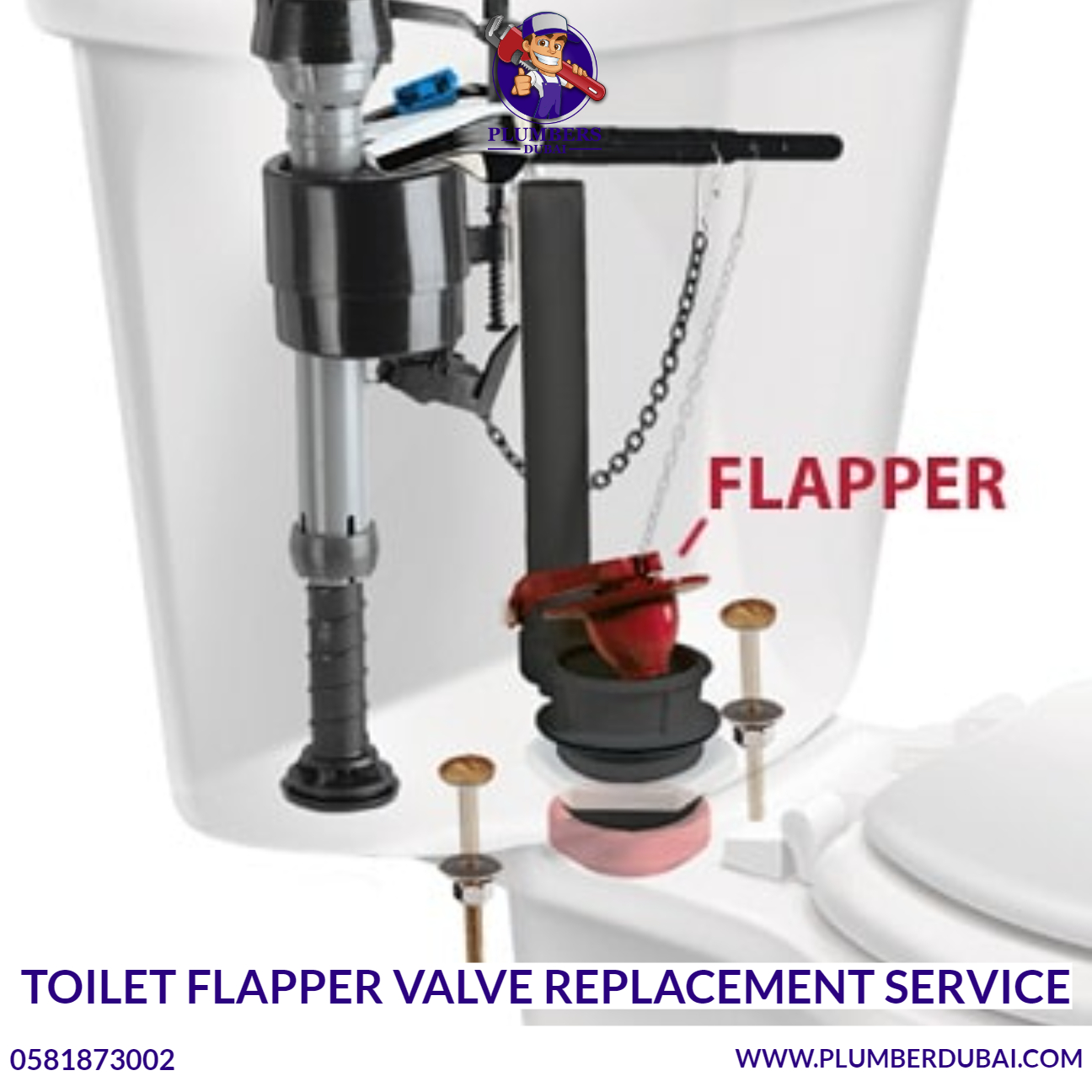
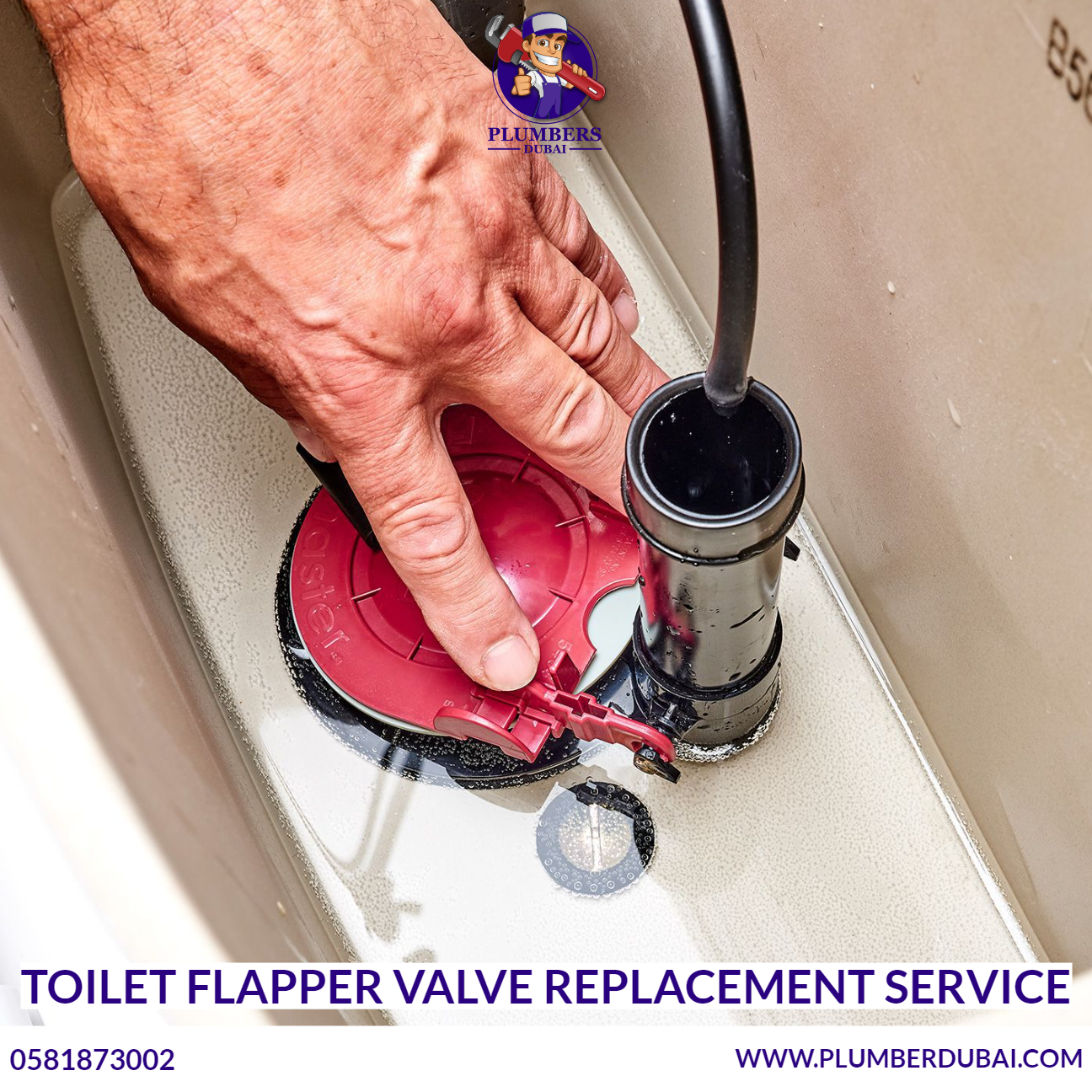
The flapper sits at the bottom of the toilet tank, covering the flush valve opening — the hole that water drains through into the bowl when you flush. When the flapper seals properly, water stays in the tank between flushes. When it does not seal — because it has hardened, warped, cracked, or shifted off its seat — water leaks slowly into the bowl, the fill valve senses the drop in tank water level, and it tops the tank back up. This cycle repeats continuously, which is why a failing flapper often sounds like the toilet is randomly refilling itself for no reason.
The simple test: lift the tank lid and add a few drops of food colouring to the tank water. Wait 10 to 15 minutes without flushing. If colour appears in the bowl, water is leaking past the flapper. This single test rules out the fill valve and float as the cause — if those were the problem, the symptom would be different (the tank either overfilling and running into the overflow tube, or not filling enough).
A second sign worth checking: look at the flapper itself. A flapper that has gone hard, brittle, or has a warped or curled edge is visibly different from a flexible, flat new one. Mineral buildup — a chalky white or grey coating — on the flapper or around the valve seat is common in Dubai and prevents a proper seal even if the flapper material itself is still in reasonable condition.
Why Flappers Fail Faster in Dubai
Most toilet flappers are rated for several years of normal use by the manufacturer. In Dubai, the actual lifespan is often shorter — commonly 12 to 24 months for standard rubber flappers in properties with no water softening.
Two factors drive this. The first is the mineral content in Dubai’s water supply. Calcium and magnesium deposits settle on the flapper surface and on the valve seat it sits against. Over time this buildup prevents the flapper from forming a flat, complete seal — even a flapper that is otherwise in good condition will leak if the seat underneath it has a layer of scale on it.
The second factor is chemical toilet cleaners used directly in the tank — the kind that sit in a cage or clip onto the tank wall and release cleaning chemicals into the tank water with every flush. These products work by being mildly corrosive, and standard rubber flappers degrade noticeably faster in tank water that is continuously treated this way. If your toilet uses an in-tank cleaning product and the flapper needs replacing more often than once a year, switching to a bowl-only cleaning product extends flapper life significantly.
What the Replacement Involves
Matching the Flapper to the Valve
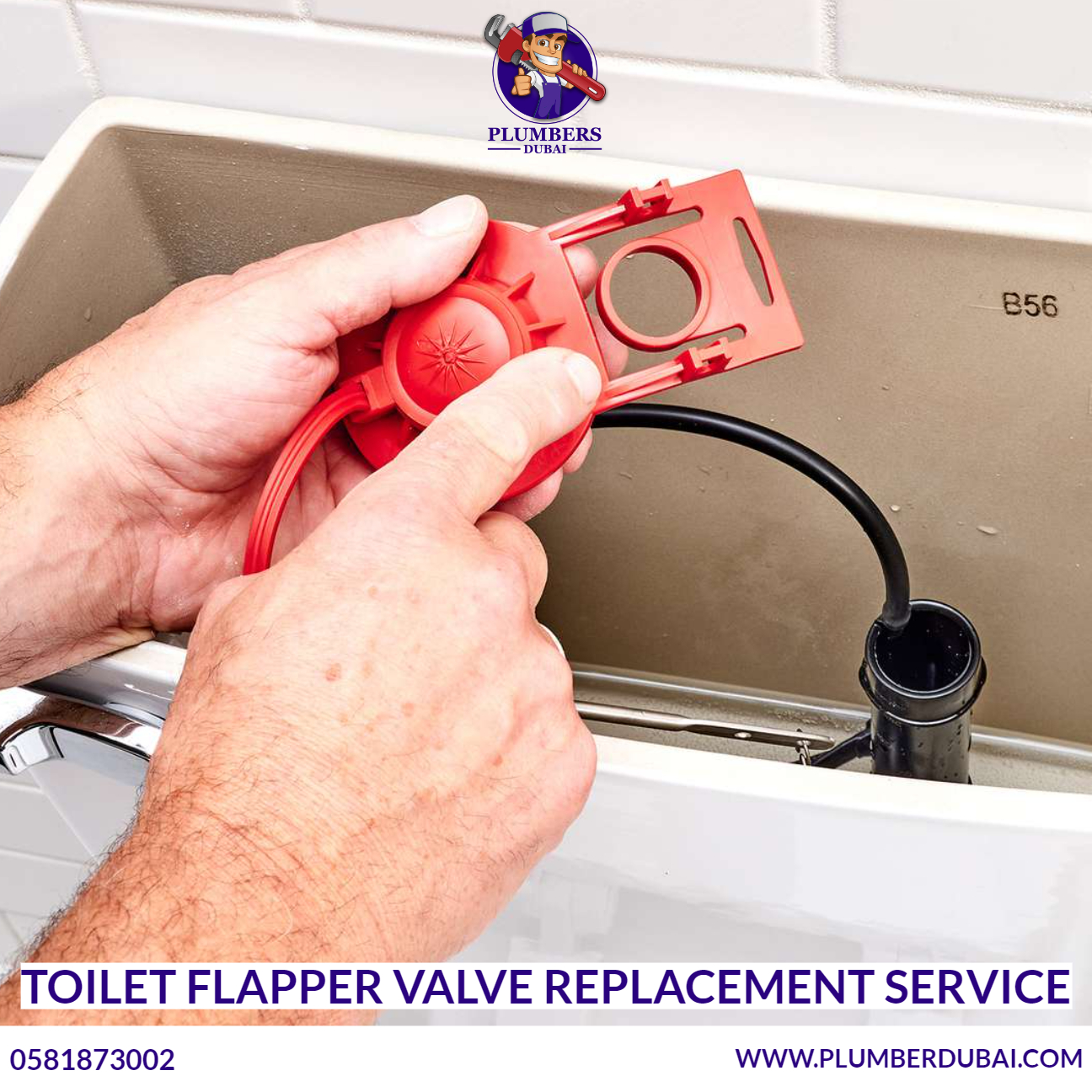
Toilet flush valves come in a few standard sizes — 2 inch and 3 inch are the most common, and the flapper needs to match the valve opening it sits over. There are also two common attachment styles: flappers with side ears that hook onto pegs on either side of the flush valve tube, and flappers with a centre ring that slides down over the overflow tube. Buying a “universal” flapper that does not correctly match either the size or the attachment style of your specific valve produces a flapper that sits slightly off-centre or does not seal flush against the seat — which means the running toilet problem continues even after the part has been replaced.
Bringing the old flapper with you when buying a replacement, or photographing the valve assembly before removing anything, makes it straightforward to get the correct match the first time.
The Replacement Process
The water supply to the toilet is isolated first — the small valve on the wall or floor behind the toilet, turned clockwise to close. The tank is then drained by flushing and holding the handle down until the water level drops below the flush valve opening.
The old flapper unhooks from the pegs on the flush valve tube, or slides off the overflow tube if it uses the centre-ring style. The lift chain connecting the flapper to the flush handle simply unclips from the small hole in the handle arm — there is nothing to cut.
Before fitting the new flapper, the valve seat — the rim the flapper sits against — gets wiped down to remove any mineral deposits or debris. This step matters more than it might seem: fitting a brand new flapper onto a scaled seat reproduces the same leak within weeks. A seat with heavy, hardened scale buildup sometimes needs a light descaling treatment before the new flapper will seal correctly.
The new flapper attaches the same way the old one was removed — hooked onto the side pegs or slid over the overflow tube depending on the design. The chain connects to the flush handle with enough slack that the flapper sits flat and closed when the handle is at rest, but not so much slack that the chain bunches underneath the flapper and props it open slightly. Too tight, and the flapper gets held up just enough to prevent a full seal — which causes exactly the same slow leak the new flapper was meant to fix.
Testing
The water supply is reopened and the tank allowed to refill. The toilet is flushed several times while watching the flapper — it should lift fully out of the way during the flush and drop back flat onto the seat as the tank refills, sealing completely with no continued trickle into the bowl. The food colouring test repeated after the replacement confirms the seal is holding.
When It Is Not the Flapper
If the food colouring test shows no leak into the bowl but the toilet still runs intermittently, the cause is elsewhere. A fill valve that does not shut off completely keeps adding water until it reaches the overflow tube, where it drains away continuously — this sounds similar to a flapper leak but the water is going down the overflow rather than past the flapper. A float set too high produces the same overflow symptom.
A toilet that makes a delayed refilling sound a few minutes after being flushed — rather than continuously — sometimes has a flapper that closes slightly delayed, allowing a brief amount of extra water through before sealing. This is a borderline case and a flapper replacement often resolves it, but if it persists after replacement, the flush valve seat itself may be worn or pitted and need replacing as a unit rather than just the flapper.
Frequently Asked Questions
How much water does a leaking flapper actually waste?
More than most people expect. Even a flapper that is leaking slowly enough that you cannot hear it can waste 50 to 200 litres per day, depending on how poor the seal is. A flapper that is visibly not sealing — where you can hear continuous trickling — can waste several hundred litres per day. Over a billing cycle, this shows up as a noticeable, unexplained increase in the water bill, often before the homeowner notices any sound from the toilet itself.
Can I use any flapper, or do I need the exact brand for my toilet?
You do not need the exact original brand, but you do need to match the size and attachment style. Most hardware stores in Dubai stock flappers that cover the common 2 inch and 3 inch valve sizes with both side-peg and centre-ring attachment options. The exact brand matters less than getting the size and fit correct — a correctly sized generic flapper seals just as well as an original manufacturer part.
My flapper looks fine — no cracks, no obvious wear — but the toilet still runs. What else could it be?
A flapper can look intact while still failing to seal, usually because of scale buildup on the valve seat underneath it rather than damage to the flapper itself. Clean the seat thoroughly with a cloth and check for any ridges or chalky deposits where the flapper makes contact. If the seat is heavily scaled or has a visible groove worn into it, replacing the flapper alone will not fully resolve the leak — the seat needs cleaning or, in more worn cases, the flush valve assembly needs replacing.
How often should toilet flappers be replaced in Dubai?
As a general guide, every 12 to 24 months for standard rubber flappers in properties without water softening, and longer for properties using a whole-home water softener or scale inhibitor. Rather than replacing on a fixed schedule, the food colouring test once every few months is a more reliable way to catch a failing flapper before it shows up as a higher water bill.
Is this something I can do myself, or should I call a plumber?
Replacing a flapper is one of the more straightforward toilet repairs and many homeowners do it themselves successfully. Where people get stuck is matching the replacement to the existing valve, dealing with a scaled valve seat that needs cleaning before the new flapper will seal, or finding that the issue is not the flapper at all once it has been replaced. If you would rather not work it out through trial and error — or the toilet has already had one flapper replacement that did not fix it — a plumber can diagnose and fix it properly in one visit.
For toilet flapper replacement or any running toilet issue in Dubai, call Plumber Dubai on 0581873002. We carry flappers and flush valve components for the most common toilet brands and fittings used in Dubai properties, and most running toilet calls are resolved in a single visit.